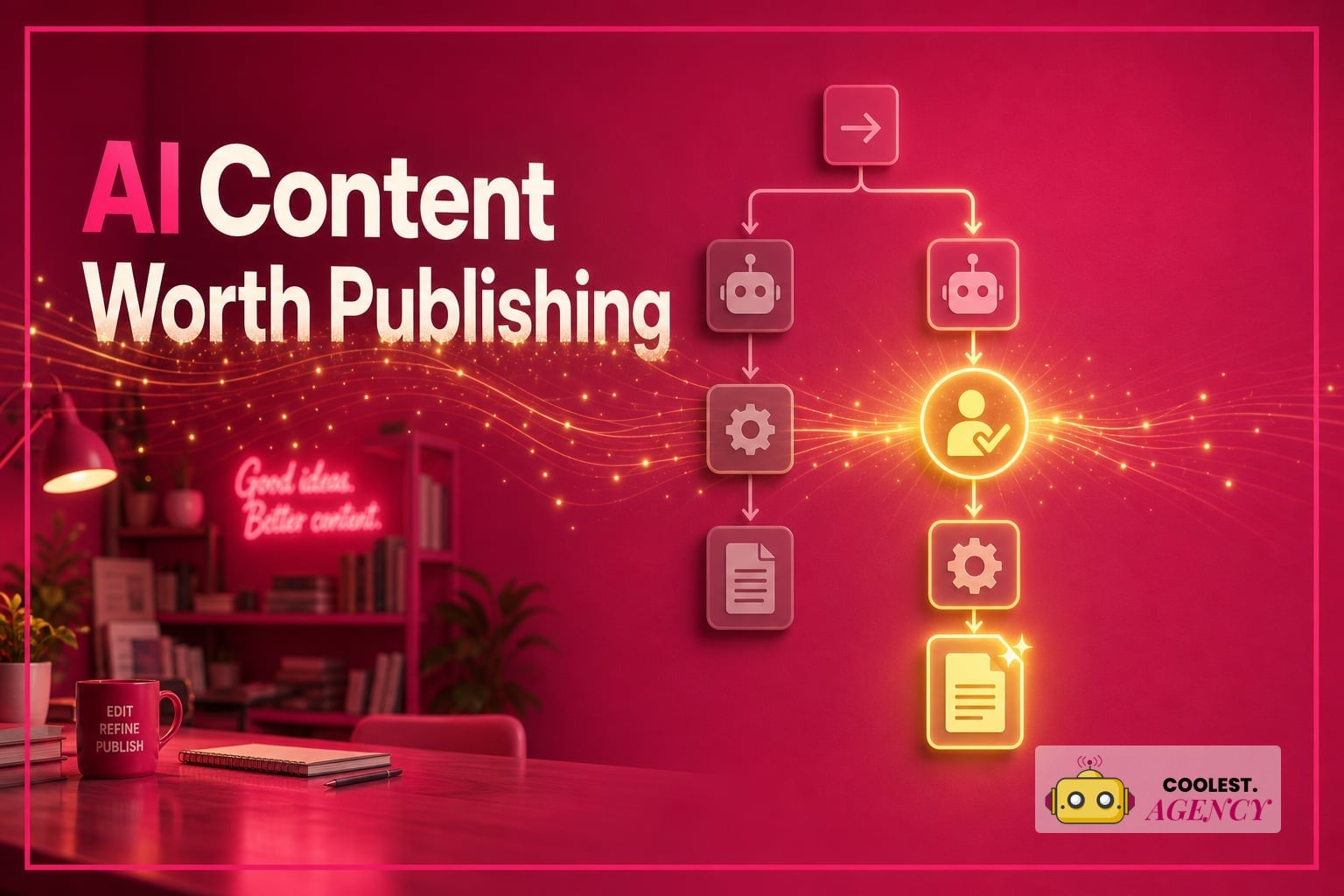
The Workflow That Keeps Humans in the Loop So Your AI Content Stops Sounding Like Everyone Else's
Here's the fear you already have: your AI content is fast, cheap, and starting to sound exactly like your competitor's. A human-in-the-loop content workflow fixes that by putting editors at specific checkpoints, not everywhere, so your brand voice survives contact with AI. Get the placement wrong and you're just automating mediocrity faster.
Key Takeaways
- 1 in 3 AI-only pieces ships with factual or tone errors, your reputation is the collateral damage.
- Match human review to risk, not habit: high-stakes content needs eyes on every line, low-risk volume doesn't.
- The Audit-Draft-Edit-Optimize cycle adds 45 minutes but cuts revision rounds in half.
- 76% of enterprises already run human-in-the-loop checks specifically to catch AI hallucinations.
Why Full Automation Is a Reputation Bet You Don't Want to Make
Structured human checkpoints are the difference between a content engine and a liability machine, and right now most brands are running the liability machine at full speed. Studies show roughly 1 in 3 fully AI-generated pieces carries a factual error or tone mismatch before it ever gets caught.
That's not a rounding error. That's a third of your published output quietly telling your audience you don't proofread your own brand.
76% of enterprises now build human-in-the-loop checkpoints specifically to catch AI hallucinations before they go live, according to Synvestable's enterprise oversight research. The ones skipping this step aren't saving time. They're deferring the cost to a customer service ticket or a correction post.
Brands running structured human review have tripled engagement without losing brand voice, proof that oversight isn't the drag on output, it's the multiplier. The co-pilot model works precisely because why the co-pilot model beats full automation isn't about slowing AI down. It's about aiming it. So where exactly do you place the human? That's the whole game, and most guides stop right before answering it.
Match Your Human Review Effort to Your Content's Risk Level
Not every piece deserves the same scrutiny: tier your oversight by risk using In-the-Loop, On-the-Loop, and Over-the-Loop placement, and you stop wasting senior editor time on a product FAQ.
Here's where most teams bleed senior editor hours on content that never needed them.
| Loop Placement | Content Risk Level | Human Action Required | Example Content Type |
|---|---|---|---|
| In-the-Loop | High | Every line verified before it ships | Press releases, legal or clinical claims, thought leadership |
| On-the-Loop | Medium | Editor reviews AI draft, spot-checks tone and facts | Blog posts, sales emails, landing pages |
| Over-the-Loop | Low | Human sets rules, audits samples periodically | Social captions, internal notes, high-volume tagging |
This is where calibrate your AI to sound like your brand earns its keep. Without calibration, even On-the-Loop content drifts generic by post three. And 99.9% accuracy is achievable, but only when the loop placement matches the stakes, per Synvestable's HITL design patterns. This tiering is your Unfair Advantage: the operators who get it are publishing content that ranks, while everyone else is filling a calendar nobody reads. Now let's make it operational.